
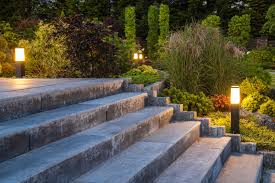
Creating Safe and Stylish Pathways With Landscape Lighting
Outdoor illumination enhances visibility along walkways, driveways, and garden paths. The process serves a dual purpose by reducing the risk of slips or falls while deterring potential trespassers from lurking on your property. Creating safe and stylish pathways with landscape lighting involves the following:
Alternating Light Placement
Landscape lighting professionals alternate light placement to guide people safely while having an aesthetically pleasing pattern. Installers can stagger fixtures on opposite sides of a walkway to illuminate the entire width of the path. A designer could place a bollard light near a specific shrub, then position the next fixture on the opposite side. They place the fixtures some distance apart to create a pattern that eliminates dark patches.
Professionals incorporate down lighting to illuminate where the feet land. This helps identify potential hazards, such as slippery patches, while walking. By shielding the light source and directing it toward the ground, the system helps minimize light pollution while reducing glare. These fixtures cast a wide pool of light, providing ample coverage for a larger section of a walkway. This method creates a high-end ambiance by making the natural effects of moonlight filtering through trees.
Concealing Light Sources
Light concealment involves placing fixtures behind obstructions such as boulders, thick shrubbery, or low-lying garden walls. Designers hide the hardware to provide illumination for navigating safely while avoiding the cluttered look of too many visible fixtures. This approach relies on the light reflecting off nearby surfaces to wash the ground in a soft radiance. Tucking away lamps within foliage eliminates the risk of blinding guests with a high-intensity glare that can obscure their vision. Experts focus on the light output rather than the fixture itself to create well-protected environments.
Installing Recessed Luminaries
Experts install recessed luminaries to provide high-quality illumination without the physical clutter of traditional post-mounted fixtures. They mount these specialized lights directly onto the ground or hardscape surfaces, such as stone walkways or concrete driveways, to keep the flat surface. This method is useful for narrow passages, where traditional lamps might pose a tripping hazard. Experts rely on the following technical considerations to achieve a professional and safe result:
- Core drilling into stone
- Integrating lights into wood
- Sealing units against moisture
- Positioning lamps for uplighting
- Wiring components beneath surfaces
Core drilling creates a permanent housing for the light fixture. Professionals seal them to prevent moisture from reaching the LED components and causing failure. Wiring components beneath the surface keep the entire system invisible during the day.
Brightening Shadowed Corners
Lighting professionals brighten shadowed corners to eliminate blind spots at the bends of a path. Addressing these dark voids adds a layer of depth and balance to the architectural lighting scheme. Experts use soft washes of light to bridge the gap between the path and the home’s exterior walls. This technique involves using wide-angle fixtures that cast a gentle glow into corners where shrubs or fences meet.
Learn More About Landscape Lighting
Technicians may integrate smart lighting systems to control lights during the day or night. They perform system maintenance and upgrades to preserve the safety and style impacted by growing foliage. Contact a reputable outdoor lighting company to explore their services.
- The Environmental Benefits of Tree Services in Urban Areas
- Creating Safe and Stylish Pathways With Landscape Lighting
- How to Transition Your Lawn Care Service for the Changing Seasons
- Healing from Trauma: The Best Inpatient Mental Health Support for Teens in Boise
- Creating Custom Screen Printed Shirts with Adobe Express: A Modern Guide to Personalized Apparel